Highlights
- In 1996, Hulk Hogan's heel turn and the formation of the NWO transformed wrestling and created the need for a superhero-like character to oppose them.
- Sting's transformation into the Crow character became a defining moment in WCW, with his silent and serious demeanor captivating audiences.
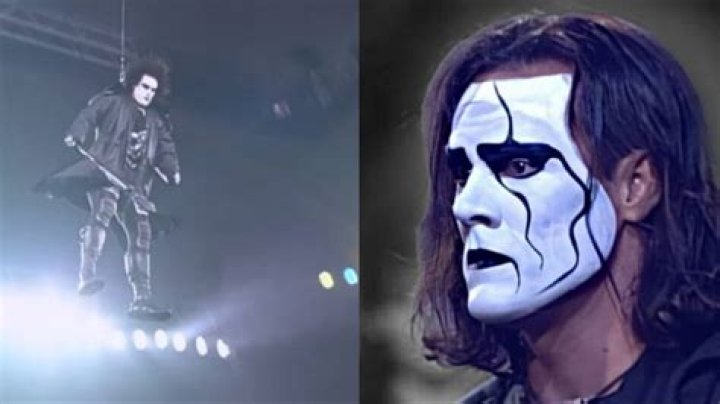
- Sting's iconic rappelling entrance from the rafters, inspired by Batman, became a jaw-dropping spectacle, but the first time he did it almost ended in disaster.
Wresting underwent a seismic shift in 1996 when the ultimate good guy, Hulk Hogan, turned heel at Bash at the Beach, leading to the formation of the NWO with Kevin Nash and Scott Hall. The NWO, who quickly grew in their ranks, dominated WCW in 1996. There were those like The Giant, Lex Luger, and Randy Savage who stepped up to stop them, but just as in movies and comic books, every supervillain needs a superhero opposing them.
Enter Sting. As the franchise, the face of WWE, he was the perfect choice to go up against the NWO. WCW pulled it off brilliantly, at least until Sting and Hogan finally met in the ring for the overbooked mess that was Starrcade 1997. It gave Sting the best run of his career, and it almost killed him.
Sting's WCW Character Dramatically Changed With The NWO Angle

Before that though, WCW dominated WWE thanks to the NWO and the acts of Sting. The blonde haired, smiling, surfer Sting was gone. In his place was a serious and silent man, the Crow Sting. He was a one-man army against the ever-increasing NWO. How many Nitros went off the air with Sting marching down to the ring, taking out his enemies all by himself?
Sting was the face of WCW in 1997, and he did it all without wrestling a match until the end of the year. He didn't need to. His storyline was all about the build, the tension increasing every week. The Crow character was something we hadn't seen in wrestling before. Part of that was how he would sit high in the arena in the rafters, almost like Batman watching over Gotham. And then he started dropping from the rafters, a superhero come to life.
RELATED: Why Sting Vs. The nWo Is The Greatest Feud In WCW History (& Why It Is Overrated)
Sting Rappelling From The Rafters On Nitro Became A Normal Sight

As the NWO's membership reached critical mass, with the faction now taking up the entire ring some Mondays, Sting with his baseball bat wasn't enough. He needed a way to make a quick entrance, attack, and leave. He accomplished this by rappelling from the rafters like the Dark Knight.
It's not something Sting did every week, just here and there to go for that jaw dropping visual to end the night, with Tony Schiavone screaming that they were out of time. Sting made it look effortless, swooping down either in the aisle or in the ring itself. He'd drop down behind Hogan and Bischoff, the two unaware of his presence, or most impressively, he once came down to save DDP, only to then hook Page up to the rope and go sailing off into the air. It became a spectacle, but the first time Sting ever did it almost ended in disaster.
RELATED: Sting In The Rafters: Why WCW’s Long Term Sting Vs. NWO Storyline Was Brilliant
Sting Almost Died The First Time He Rappelled From The Rafters

You can't think about a wrestler dropping from the rafters without thinking about the tragedy of Owen Hart in 1999. Two years before, on January 20, 1997, Sting came close to suffering a similar fate. In a 2004 interview with Wrestling Epicenter, Sting spoke about the incident that almost killed him. "My training happened on the very first day that I did it, which was Chicago at the United Center. We had a couple of stunt guys there working with me, and I rappelled four times earlier in the day to practice. I actually did some rappelling with the same stunt guy out here in California, off some cliffs and rocks – you know, practicing and getting ready." Sting admitted that it was very scary and said the practices didn't go well, as he kept spinning on the way down. The stunt guy told him he was spinning because he wasn't going fast enough. Sting went to Eric Bischoff and told him he couldn't do it, but Bischoff convinced him to go through with it. "The only other chance I had to try it again would be live [on TV]. And I knew that it was make or break – I knew that if I ended up spinning, I knew that that was going to be the end of the career – you know, the laughing stock – and it would’ve been over."
Sting continued on about how chaotic the moment was, with the roar of the Nitro crowd traveling up, and the disorientation of the lights and pyro. Then it almost went fatally wrong. "And when I stepped over, we realized we had the thing set up backward – so while I was standing on the edge, we had to flip the rope around and then reweave it through... I’m telling you if I’d stepped over and done it, the same thing that happened to Owen would have happened to me." (h/t Pro Wrestling Stories)
Sting kept doing the rappelling spots after that scary night, but when Owen Hart died two years later, Sting stopped for a long while. He only started doing it again when he got permission from Bret Hart.