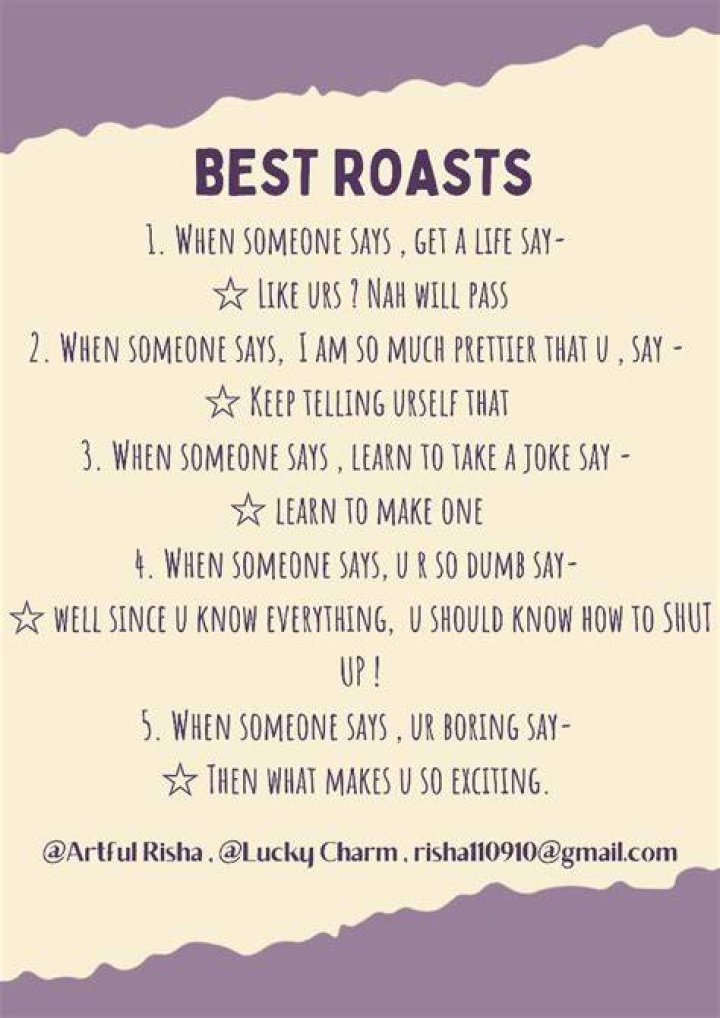
In today's world of social interactions, roast words have carved out a niche for themselves, providing a unique blend of humor and cleverness. Roast words refer to playful insults or humorous remarks typically delivered in a light-hearted manner. They are often used among friends, during comedy routines, or at roast events where the intention is to entertain rather than offend. Understanding the dynamics of roast words can enhance your social skills and add a fun layer to conversations.
Throughout this article, we will delve into the intricacies of roast words, exploring their history, usage, and how to effectively deliver them without crossing the line into hurtful territory. We will also provide examples, tips, and techniques to help you master the art of roasting, ensuring that you can engage in this playful banter while maintaining respect for your audience.
Join us as we navigate the landscape of roast words, uncovering their significance in modern-day communication and how they can be a source of laughter and camaraderie among friends. Whether you're looking to sharpen your wit or simply enjoy the cleverness of roast humor, this comprehensive guide is for you.
Table of Contents
History of Roast Words
Roast words have a rich history that dates back to ancient times. The concept of roasting can be traced back to the Roman Empire, where satire and humor were prevalent in performances. The historical tradition of roasting was more formalized in the 20th century, particularly with the advent of television.
Early Influences
In the early days of comedy, performers often used clever wordplay and insults as a way to entertain audiences. Comedians like Don Rickles and Joan Rivers popularized the art of roasting, paving the way for future generations. Their unique styles and fearless delivery set the standard for what it means to roast someone effectively.
The Birth of Roast Events
The first official roast event took place in 1975 when the Friars Club in New York City hosted a roast for comedian Lucille Ball. This event marked the beginning of a new era in comedy, where the focus shifted to roasting as a mainstream form of entertainment.
Types of Roast Words
Roast words can be categorized into various types, each serving a different purpose and style. Understanding these types can help you choose the right approach for your audience.
Playful Insults
- Light-hearted jabs that are meant to be funny rather than hurtful.
- Examples: "You’re like a cloud; when you disappear, it’s a beautiful day!"
Witty Comebacks
- Quick responses that turn the tables on the original comment.
- Examples: "I’d agree with you, but then we’d both be wrong."
Self-Deprecating Roasts
- Making fun of oneself to create humor and relatability.
- Examples: "I put the ‘pro’ in procrastination!"
Techniques for Delivering Roast Words
Mastering the art of roast words requires practice and understanding the dynamics of humor. Here are some effective techniques to consider:
Timing and Delivery
Timing is crucial when delivering roast words. A well-timed remark can enhance the humor and impact of your words. Maintain a confident posture and deliver your lines with a smile to ensure that your audience knows you mean no harm.
Know Your Audience
Understanding your audience is essential. Tailor your roast words to fit the personalities and comfort levels of those you are roasting. Avoid sensitive topics that could lead to discomfort or offense.
Famous Roasts in Comedy
Throughout the years, numerous celebrities have participated in roast events that have become iconic in the comedy world. Here are a few notable examples:
Comedy Central Roasts
- The Comedy Central Roast of Justin Bieber featured several celebrity roasters, including Kevin Hart and Snoop Dogg.
- The Roast of Charlie Sheen showcased the talents of comedians like Amy Schumer and Pete Davidson.
Legendary Roasters
- Don Rickles, known as the "Merchant of Venom," became famous for his quick wit and sharp tongue.
- Jeff Ross, often called the "Roastmaster General," has hosted several roast events and is widely regarded as a master of the craft.
The Impact of Roasting Culture
The culture of roasting has had a significant impact on comedy and social interactions. It fosters a sense of camaraderie among friends while allowing for the expression of humor in a safe environment.
Building Bonds
Engaging in playful roasting can strengthen relationships, as it often signifies a level of comfort and trust. Friends who roast each other are usually secure in their friendship, allowing them to share laughs without fear of crossing boundaries.
Encouraging Creativity
The playful nature of roast words encourages creativity and quick thinking. Crafting clever insults and comebacks can enhance your linguistic skills and make social interactions more engaging.
Dos and Don'ts of Roasting
When it comes to roasting, there are essential guidelines to follow to ensure your humor remains light-hearted and fun.
Dos
- Do know your audience and their boundaries.
- Do keep the tone light and playful.
- Do use self-deprecating humor to lighten the mood.
Don'ts
- Don’t target sensitive topics or personal struggles.
- Don’t take the roast too seriously; it’s all in good fun.
- Don’t cross the line into cruelty or meanness.
Creating Your Own Roast Words
Now that you have a grasp on the art of roasting, it's time to create your own roast words. Here are some tips to get you started:
Brainstorming Ideas
Think about the quirks and personality traits of the person you want to roast. Use these characteristics as a foundation for your roast words.
Wordplay and Puns
Incorporate clever wordplay and puns to enhance the humor of your roast. Play with language to create a unique and memorable insult.
Conclusion
In conclusion, roast words are a delightful form of humor that can enhance social interactions and foster camaraderie among friends. By understanding the history, types, and techniques of roasting, you can effectively engage in this art form while ensuring that your remarks are taken in good spirit. Remember to always consider your audience and maintain a playful tone to keep the laughter flowing.
We hope you found this article informative and entertaining! Feel free to leave a comment below with your favorite roast words or share this article with friends who could use a laugh. For more engaging content, be sure to explore our other articles!
Final Thoughts
Thank you for reading! We appreciate your visit and invite you to return for more insightful and entertaining articles in the future. Happy roasting!
Ankara Style: The Vibrant Essence Of African Fashion
Exploring The Rise Of British Rappers: A Comprehensive Guide
Understanding Bleach Filler: A Comprehensive Guide